MailerZ vs Zoho Mail is routing versus hosting. Zoho Mail is a hosted business mailbox product with its own store, clients, and suite gravity. MailerZ is not a mailbox. It points MX at a forwarding hop so hello@yourdomain lands in Gmail or Outlook, with optional paid SMTP send-as. If you need Zoho’s hosted inbox, buy Zoho. If you already live in Gmail and only needed the domain, do not buy a second store.
Quick answer for mailerz vs zoho mail
Hosted email sells seats and a store. Forwarding sells a hop. Price comparisons that ignore that are marketing.
RFC 5321 does not care about your suite. It cares who answers MX.
MailerZ envelope SRS, intact headers, HOLD on Free, paid send-as from the dashboard. Zoho’s current feature and price list lives on Zoho’s site. This article will not invent it.
If you need shared IMAP folders on the domain, a host may be correct. If you need a logo on From in Gmail, a hop plus SMTP may be correct.
A Zoho trial leftover MX is a classic split after someone “just tested.” Delete it if MailerZ owns inbound.
Soft CTA: start free on MailerZ only after you decide you do not want a second store.
Authoritative mail transport is defined in IETF RFC 5321 — Simple Mail Transfer Protocol. Product path: features, pricing, and Google Workspace comparison.
User problem and decision criteria
Decision criteria: store location, suite needs, send-as, hop history, alias counts, who already trained users on Gmail.
Criteria that do not belong: inboxing SLAs, SOC 2 theater, dual MX safety.
If leadership wants Zoho CRM gravity, mail hosting may ride along. That is a suite decision, not an MX optimization.
If users will not leave Gmail, a Zoho inbox becomes a ghost store. Mail will be “missing” because nobody opened Zoho.
Agencies should ask which tab the client already lives in. Do not migrate habits as a surprise.
If you only needed three role aliases, Free MailerZ plus Gmail may close the job. Quote limits honestly.
If you need legal hold in a host archive, MailerZ’s fourteen or ninety day store is not that. Say so.
Campaigns still want an ESP either way.
Technical mail flow
Zoho-as-host: MX to Zoho, store in Zoho, clients to Zoho.
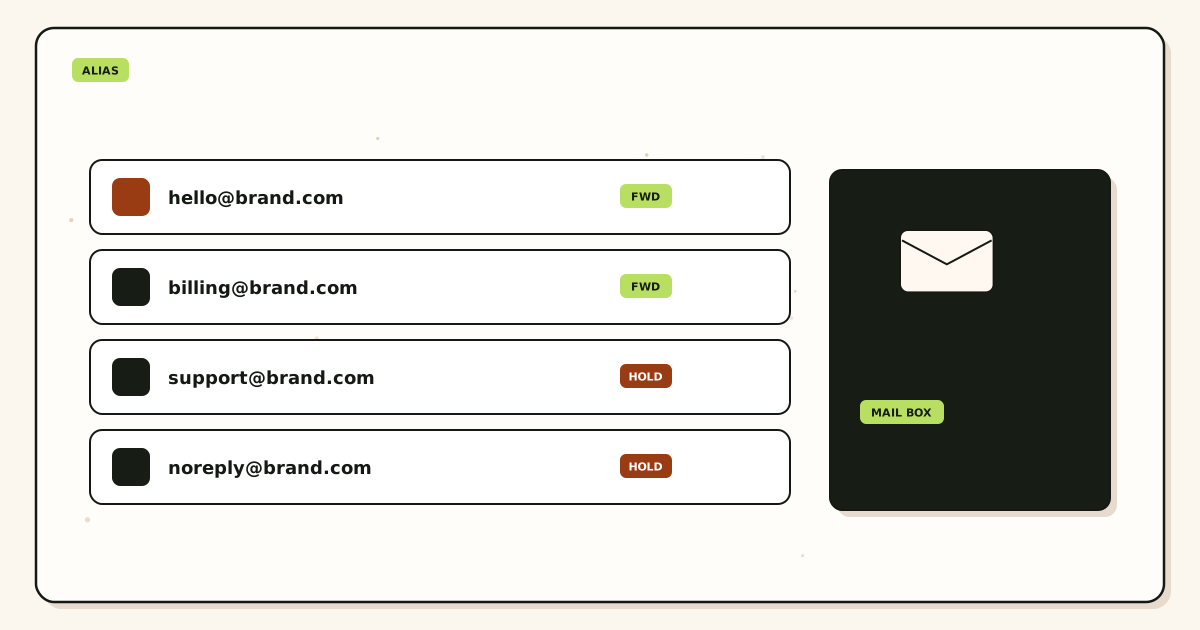
MailerZ: MX to MailerZ, hop to Gmail or Outlook, optional SMTP out as the domain.
Hybrid without exclusive MX is leftover MX. Refuse it.
Send-as from Gmail through MailerZ SMTP is a documented path. Copy dashboard values. Free cannot.
History lives where the hop is. Zoho traces live in Zoho. Do not expect one console to show the other.
Step-by-step setup / decision path

- Write where mail must live.
- If Gmail/Outlook stay, inventory aliases for MailerZ.
- If Zoho store is required, plan a host migration instead.
- Never publish both MX sets.
- Probe the chosen path from a third mailbox.
- Enable SMTP only on the chosen outbound identity.
- Delete trial leftovers.
- Quote live prices from both vendors the day you buy.
A weekend Zoho trial is how leftover MX is born. Calendar a delete.
Users trained on Gmail will not discover Zoho folders. Budget training if you pick the host.
Compare /compare/google-workspace if the real alternative in the room is Google, not Zoho.
Failure modes and proof
Dual MX Zoho plus MailerZ: split. Proof: public MX.
Ghost Zoho inbox: “missing” mail. Proof: nobody logged in.
Expected IMAP on MailerZ: wrong aisle.
Expected unlimited aliases on Free: three.
Trial leftovers: random arrival.
Invented Zoho prices: stale.
Inboxing table: fiction.
Header rewrite demand on MailerZ: no.
Archive fantasy on fourteen-day store: no.
Self-send bake-off: lie.
ESP on either SMTP: caps and filters.
SOC 2 in the deck: MailerZ does not claim it.
MailerZ workflow and product boundary
MailerZ is custom-domain aliasing and forwarding with optional paid send-as. Secuno LLC operates mailerz.net. The app is mail.mailerz.net. Not Workspace, not IMAP, not an open relay, not a campaign ESP.
Envelope SRS only. Header From, Subject, Date, Message-ID, body, and MIME stay intact. Exclusive MX. Hold unknown on Free. Copy SMTP host, port, and TLS or STARTTLS from the dashboard when you send. Do not invent 587 or 465 as MailerZ facts.
Free: one domain, ten aliases, one seat, fourteen-day store, send-as disabled, SMTP and API disabled. Solo forty dollars a year, twenty-five aliases, ninety-day store, 2,500 outgoing, 20 send-as per hour. Starter eight monthly or eighty yearly. Business nineteen or one hundred ninety. Agency thirty-nine or three hundred ninety. Quote the pricing page. No SOC 2, ISO, HIPAA, SLA, or inboxing percentage.
MailerZ is the hop around the inbox you already use. Zoho is a store. Features and pricing pages are the surfaces. Compare Google Workspace if that is the real suite in the room.
Cost, alternatives, and trade-offs
Seats times humans is the host cost. Aliases times roles is the hop cost. Do not compare them as if they were the same unit.
A cheap Zoho seat is still a second tab. Training time is a cost.
MailerZ Solo at forty dollars a year can replace several role seats if those seats only existed for aliases.
Agencies should present two quotes, not a blended fake.
Leftover trial MX costs incidents, not just money.
Archive and eDiscovery, if you need them, are host or third-party archive costs. Do not pretend the MailerZ store is that.
Check both live price pages the day you sign.
The wrong store is more expensive than the higher invoice.
Operational depth
Ask every stakeholder which window they already have open all day. That window is the store you should not fight.
If a founder wants “business email” as a status symbol, they may want a host logo. That is a branding purchase. Name it.
If the team is already on Google Workspace, Zoho versus MailerZ is the wrong triangle. You are arguing whether to keep Workspace or drop to forwarding. Use the Workspace comparison page.
Role addresses do not need seats on a host if they only route. They need named aliases and owners.
When a Zoho trial ends, MX may still point there. Treat that as leftover MX. Delete it.
Send-as identity must match the store users reply from. Split brain From lines are how threads fork.
HOLD on MailerZ will confuse people who expected Zoho to accept all local-parts. Teach the difference before cutover.
Do not run a dual-MX “transition month.” Transitions are exclusive cuts plus TTL waits.
Document who pays which invoice. Two mail invoices without a job split is how companies keep both forever.
If compliance asked for a hosted admin console, they asked for a host. Forwarding history is not that console.
Probe with a third mailbox regardless of vendor. Self-send lies in every bake-off.
Keep the decision memo. Future you will thank you when someone proposes “just add Zoho MX for backup.”
Field notes for hop versus Zoho store
Two products, one printed address
Zoho Mail is a hosted business mailbox: a store, clients, and suite gravity. Quote Zoho live for seats, calendar, and their admin console. MailerZ is inbound MX plus authenticated SMTP. Envelope SRS. Header From never rewritten. Not IMAP or POP. Mail Box is portal webmail. If staff need a Zoho inbox they open every day, buy Zoho and exclusive Zoho MX. If staff already live in Gmail and only needed hello@ to arrive, buy the hop. Price comparisons that ignore the store are marketing.
Do not dual-publish MX to have both. Dual MX is leftover. Some senders hit Zoho, some hit MailerZ. History on one side stays quiet. That is a split, not a hybrid. A Zoho tenant can remain for calendar after you delete leftover Zoho MX — a tenant is not leftover MX. Exclusive inbound owner still applies.
Trial leftovers
When a Zoho trial ends, MX may still point at Zoho. Treat that as leftover MX. Public lookup. Delete those hosts if MailerZ owns inbound. If you decide the store was worth it, exclusive Zoho MX and delete MailerZ leftovers. Rollback is republish the saved exclusive set, not both live for a month.
HOLD on MailerZ will confuse people who expected Zoho to accept all local-parts. Teach named aliases before cutover. Catch-all is not a namespace.
Send-as and split-brain From
If users reply from Zoho as hello@ while inbound is MailerZ, threads fork. Pick the store people already use. Paid MailerZ send-as plus Gmail Send mail as is the hop-shaped From. Zoho native From is the store-shaped From. Free MailerZ cannot send-as. Unauthorized is 550 / 5.7.1.
SPF, DKIM, and DMARC follow the sending hop. Two includes forever after you left a vendor is a split story. Authentication is not encryption. Not HIPAA. Not SOC 2.
Roles versus seats
Role addresses do not need Zoho seats if they only route. They need named aliases and owners in Gmail. Twenty roles and three humans is Starter money on MailerZ, not twenty hosted users. Twenty humans who need Zoho Calendar is suite money. Write the must-haves. Calendar and lockable IMAP point at Zoho. hello@ in Gmail points at MailerZ.
Compliance that asked for a hosted admin console asked for a host. Forwarding hop history is not that console. Fourteen or ninety days are hops this layer saw, not Vault.
Worked story: a team ran a Zoho trial, kept Zoho MX, added MailerZ for “roles,” and watched leads vanish into a trial mailbox nobody opened. They deleted Zoho MX, kept three people in Gmail, and mapped roles. The trial leftover was the outage. Zoho itself was fine as a product they were not using.
Second story: another company needed Zoho CRM mail inside Zoho. They pointed MX at Zoho exclusively and used aliases inside that host. MailerZ was the wrong SKU. Honest fork. Same week, two correct answers.
Operator brief: decide where mail must live. One inbound owner. Probe from a third mailbox. Delete trial leftovers. Quote both invoices before you mix them. MailerZ start free when the job is routing. Buy Zoho when the job is a hosted store. Never both MX sets.
Related: compare Google Workspace, forwarding versus hosting, when paying for a full email suite is worth it, and pricing. Keep the decision memo. Future you will need it when someone proposes Zoho MX as backup.
Operator packet for a Zoho versus hop decision
Must-have worksheet
Write four columns: feature, opened last month, suite or hop, inbound owner. Rows: Zoho inbox as daily store, Zoho calendar or CRM mail, device lock on a hosted user, hello@ in Gmail, role aliases without seats, branded From, hop history. Circle what you will pay for. If the Zoho inbox is unused, you wanted a hop. If Calendar and CRM mail are the operating system, you wanted Zoho exclusive MX.
Quote Zoho live. Quote MailerZ live. Do not mix leftover trial MX. A tenant can stay. Leftover MX cannot if the other product owns inbound.
How trials become leftover MX
Trials publish MX. Trials end. MX remains. That is leftover MX. Public lookup after every trial. Delete the loser. Preference numbers are not a bake-off. They are an order. The first host that accepts wins.
Self-send during a bake-off lies on both products. Third mailbox. Unique subject. Header From intact on the hop. Hosted user open on the suite.
Roles, seats, and invoices
Twenty roles into three Gmail stores is MailerZ Starter money. Twenty humans in Zoho Mail is twenty seats. Write both invoices. Two mail invoices without a job split is how companies keep both forever. Document who pays which.
HOLD versus Zoho accept-all is a teaching problem. Named aliases before cutover. Catch-all is not a migration strategy.
Compliance English
MailerZ is not SOC 2, ISO 27001, or HIPAA. Hop store is not Vault. If counsel wants a hosted admin console, they want a host. Point at /security. Do not invent badges because a hop DKIM passed.
Related: when paying for a full email suite is worth it, MailerZ versus Google Workspace, forwarding versus hosting, pricing. Start free when the job is routing. Buy Zoho when the job is a store. Never both MX sets.
More operational notes
CRM mail is not a hop feature
Zoho CRM that sends and receives inside Zoho wants Zoho MX. MailerZ will not become that CRM. If sales lives in Zoho and founders live in Gmail, pick one inbound owner and be honest about who misses what. Dual MX to please both teams fails both.
Export and cancel order
Leaving Zoho: export first, exclusive MailerZ MX, probe, then cancel seats. Leaving MailerZ for Zoho: exclusive Zoho MX, delete MailerZ leftovers, probe the hosted user, cancel the hop last. Cancel Friday and cut Monday is a weekend hole.
Mobile apps and which store people open
People open the app they already have. If nobody installed Zoho Mail on their phone, you bought a store they will forward to Gmail anyway. That is two hops and leftover risk. Keep Gmail and MailerZ instead.
Admin console versus hop history
Zoho admin is user lifecycle. MailerZ history is hop outcomes for fourteen or ninety days. Do not tell procurement they are the same. If they need the console, buy the host. If they need hello@ in Gmail, buy the hop.
Decision memo template
Date, inbound owner, store people open, leftover MX deleted, probe subjects, who pays which invoice, next review date. Future you will need this when someone proposes Zoho MX as backup. Backup MX is leftover MX.
MailerZ remains inbound MX plus authenticated SMTP from Secuno LLC. Envelope SRS only. Header From, Subject, Date, Message-ID, body, and MIME stay intact. Not Google Workspace, not IMAP or POP, not an open relay. Unauthorized send is 550 / 550 5.7.1. Leftover MX is a hard stop. Self-send from Gmail to the same Gmail account can hide routing errors. Not SOC 2, not ISO 27001, not HIPAA. Free is one domain, ten aliases, one seat, a fourteen-day store, send-as disabled, SMTP and API disabled, and unrouted mail held or rejected only. Solo is forty dollars per year. Starter is eight monthly or eighty yearly. Business is nineteen or one hundred ninety. Agency is thirty-nine or three hundred ninety. Confirm numbers on the pricing page. Limits are not an inbox-placement promise. Start free at the MailerZ register URL when inbound must be proven first.
Worked closeout
A bake-off that stayed honest
Week one: three founders already live in Gmail. They trial Zoho because a webinar said business email. They never open the Zoho app. Week two: they add MailerZ MX without deleting Zoho MX. Leads split. Week three: they write the must-have worksheet. Calendar unused. CRM unused. hello@ needed in Gmail. They delete Zoho MX, keep Gmail, probe, cancel the trial. Zoho was a fine product they did not use. MailerZ was the hop they needed. Dual MX was the outage.
Alternate ending: week one they live in Zoho Mail and CRM. They should exclusive-cut to Zoho and never add MailerZ MX. The hop would have been the wrong SKU. Honest forks can go either way. They cannot go both MX sets.
What to quote on a comparison slide
Zoho: hosted store, their live seat price, their admin console, their MX. MailerZ: hop, alias caps, paid SMTP, fourteen or ninety day hop store, no IMAP, no SOC 2. Do not put inbox-placement percentages on the slide. Do not put leftover MX as a feature called hybrid.
Roles during a Zoho keep
If Zoho owns inbound, create roles inside Zoho or accept that MailerZ aliases will not see mail. If MailerZ owns inbound, create named aliases and do not leave Zoho MX. Roles are not a reason to dual-publish.
Close this comparison ticket
Must-have worksheet done. One inbound owner. Trial leftovers deleted. Third-mailbox probe. Decision memo filed. Start free when the job is routing. Buy Zoho when the job is a store.
Last operational reminders
Why “both” feels safer and is not
Boards like backup. Backup MX from a second vendor is leftover MX. Preference sends mail to whichever host still accepts. You thought you had redundancy. You had a coin flip. Zoho plus MailerZ on the same public MX set is that coin flip. Pick the store people open or the hop into Gmail. Delete the loser. Keep the unused tenant if you still need CRM login. Tenant is not MX.
Quote both invoices. Teach HOLD versus accept-all before cutover. Probe from a third mailbox. Self-send lies in every bake-off. Authentication records follow the sending hop. They are not encryption. MailerZ will not rewrite Header From. Zoho native From is a store From. Free MailerZ cannot send-as. Confirm pricing. Start free when routing is the job.
File the decision memo. The next webinar will propose adding Zoho MX again. The memo is how you say no without starting from zero.
Definition of done
MailerZ versus Zoho Mail is finished when the must-have worksheet has an inbound owner, leftover trial MX is gone, a third-mailbox probe landed, and the decision memo says store or hop in one sentence. Dual MX is not a compromise. It is a split. Quote both live invoices. Teach HOLD versus accept-all. Roles are aliases on a hop and users on a host. Do not blend those sentences on a slide. Start free when routing is the job. Buy Zoho when the store is the job.
Future webinars will sell the other product again. The memo is how you keep exclusive MX. Authentication is not encryption. Hop history is not an admin console. Free has no send-as. Confirm pricing. Not HIPAA. Not SOC 2. Not an inbox-placement promise on either vendor.
The one rule
If you remember one comparison rule, remember this: a hosted mailbox and a forward hop can share a printed address and cannot share public MX. Zoho is the store. MailerZ is the hop. Pick one inbound owner, delete trial leftovers, probe from another mailbox, and file the memo. That is MailerZ versus Zoho Mail. Backup MX is leftover MX.
Quote both live invoices. Teach HOLD versus accept-all before cutover. Roles are aliases on a hop and users on a host. Authentication is not encryption. Hop history is not an admin console. Free has no send-as. Confirm pricing. Start free when routing is the job. Buy Zoho when the store is the job. Never both MX sets. The memo is how you say no to the next webinar without starting from zero.
Do not skip this
Self-send during a Zoho bake-off still lies. Use a third mailbox, a unique subject, and a public MX listing that shows one company. If two companies appear, you are not done. If history is empty after an exclusive MailerZ cut, the alias is missing or leftovers still answer on another view. If the Zoho user never opened, you bought the wrong store. Write that sentence in the memo and stop adding MX rows.
FAQ
- What is the safest way to handle mailerz vs zoho mail?
- Decide where mail must live. If staff need a Zoho inbox, calendar, and Zoho suite, that is a host. If staff already live in Gmail or Outlook and only need the domain, that is MailerZ. Do not dual-publish MX to “have both.”
- Does this require a new mailbox?
- Zoho yes—that is the product. MailerZ no. MailerZ is not IMAP.
- Will it work with Gmail or Outlook?
- MailerZ is built for those destinations. Zoho is an alternative destination or store. Exclusive MX still applies. One owner.
- What DNS records are involved?
- Whoever owns MX owns inbound. Verification and sending records follow that owner. Leftover MX from a Zoho trial next to MailerZ is a split.
- What should I test before production?
- Pick one owner. Probe from a third mailbox. Do not self-send. Do not run both MX sets.
Key takeaways
- Host versus hop. Do not blend MX.
- MailerZ is not IMAP. Zoho is a store.
- Pick the window people already use.
- Delete trial leftovers.
- Quote live prices.
- No inboxing percentage.
- Role aliases are not seats.
- Archive needs are host or archive products.
Conclusion
Buy a store if you need a store. Buy a hop if you need a domain on the inbox you already trust. Dual MX is not a compromise. It is a split.
Start free on MailerZ when the job is routing, not a second webmail.