Client domain email consolidation means each client zone keeps its public aliases and lands in the inboxes people already staff—often one Gmail per human across many brands. Do not buy a mailbox farm per domain. Map aliases, exclusive MX per zone, HOLD unknown, probe. MailerZ is the hop. Quote Agency when the domain count is the point.

Quick answer for client domain email consolidation
Humans do not need a new tab per client domain. They need maps.
RFC 5321 is per zone. Exclusive MX on each.
Leftover host MX per client is a portfolio of splits.
HOLD unknown so each brand is not a catch-all cannon.
Send-as per brand is paid SMTP and caps. Do not blast.
Start free on one rehearsal, then Agency math from /pricing.
Authoritative mail transport is defined in IETF RFC 5321 — Simple Mail Transfer Protocol. Product path: features, migration planner, and pricing.
User problem and decision criteria
Decision criteria: domain count, alias count, who staffs which brand, leftover MX debt.
Shared passwords per client webmail are the old world.
If a client demands a host store, that client is not a consolidation candidate.
Agencies should refuse catch-all as the portfolio default.
Caps if many brands send on one plan. Quote honestly.
No inboxing SLA across a portfolio.
No SOC 2 in the sales deck.
Governance: who can edit which domain.
Technical mail flow
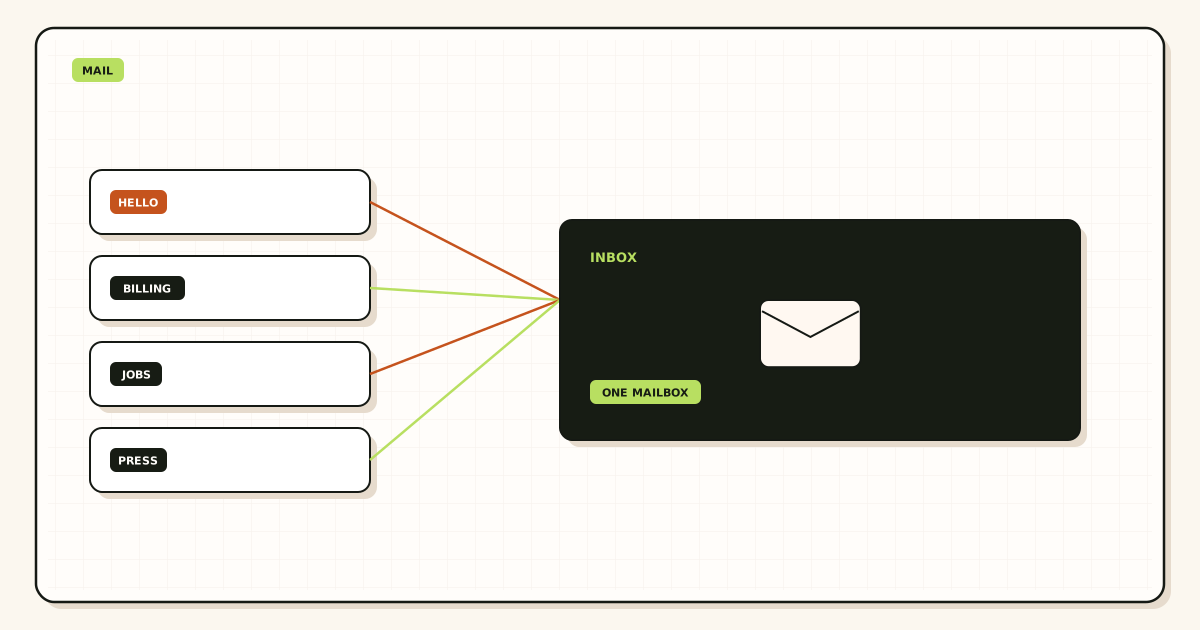
Per domain: map → exclusive MX → hop to existing Gmail.
Humans stay. Brands stay. Stores do not multiply.
SMTP as each brand if needed.
History per hop.
Offboard later with a packet.
Step-by-step setup / decision path

- Inventory domains and aliases.
- Confirm plan limits.
- Map to existing inboxes.
- HOLD on.
- Cut exclusive MX one domain at a time.
- Sample probe per domain.
- Enable send-as only where needed.
- Handoff sheets per client.
Classify the next failure before a second DNS edit.
HOLD unknown unless you wrote a FORWARD reason.
Quote live pricing before promising alias counts.
Failure modes and proof
Mailbox per domain: sprawl.
Dual MX: splits.
Catch-all default: junk retainers.
Free for a portfolio: limits.
Shared staff password.
Self-send QA.
List on SMTP.
Inboxing table.
Leftover builder MX.
No owner per brand.
Header rewrite.
Parallel production cuts you cannot read.
MailerZ workflow and product boundary
MailerZ is custom-domain aliasing and forwarding with optional paid send-as. Secuno LLC operates mailerz.net. The app is mail.mailerz.net. Not Workspace, not IMAP, not an open relay, not a campaign ESP.
Envelope SRS only. Header From, Subject, Date, Message-ID, body, and MIME stay intact. Exclusive MX. Hold unknown on Free. Copy SMTP host, port, and TLS or STARTTLS from the dashboard when you send.
Free: one domain, ten aliases, one seat, fourteen-day store, send-as disabled, SMTP and API disabled. Solo forty dollars a year, twenty-five aliases, ninety-day store, 2,500 outgoing, 20 send-as per hour. Starter eight or eighty. Business nineteen or one hundred ninety. Agency thirty-nine or three hundred ninety. Quote pricing. No SOC 2, ISO, HIPAA, SLA, or inboxing percentage.
Cost, alternatives, and trade-offs
Seats times domains was the expensive habit.
Agency plan is the honest spend.
Junk retainers from FORWARD erase savings.
Serial cuts cost calendar and save incidents.
Agencies: sell consolidation as cost-out.
Leftover MX is unpaid fire.
No fake SLA.
Rehearsal is cheap.
Operational depth
Consolidation is a map project. Calendar serial MX cuts.
One human can own support@ on five brands. Five seats were the waste.
Watch outgoing caps if all brands send receipts on the first of the month.
HOLD review can be batched weekly across domains.
Do not mix client sheets.
Quote Agency. Do not invent unlimited domains on Solo.
Leftover MX cleanup is the first week’s real work.
Practice on Free.
No dual-MX “portfolio safety.”
Revoke when a client leaves.
Probe after each cut.
Keep ESP off the hop.
Field notes for client domain email consolidation
Consolidation is a map project, not a mailbox farm. Each client zone keeps its public strings. Humans keep the Gmail or Outlook tabs they already staff. Five support@ addresses can land on one person. Five unused host seats were the waste. Exclusive MX per zone. Never one dual-MX “portfolio safety net.”
Inventory first. Domain, printed aliases, destination human, leftover MX yes/no, form SMTP yes/no, send-as needed yes/no. If the sheet is incomplete, you are not consolidating. You are scheduling 550s. Archaeology from invoices and footers is cheaper than a week of missing POs.
Quote Agency when domain count is the point. Do not stack a book on Solo because the first site was small. Limits are published. Free is one domain and ten aliases. Check pricing before you promise a portfolio. Surprise upgrade day is how retainers sour.
Serial production cuts. Prep maps in parallel. Publish exclusive MX one zone at a time so hop history stays attributable. Three brands in one hour is how you miss a leftover builder MX on the middle one.
HOLD is the portfolio default. Catch-all FORWARD as a standard becomes a junk retainer across every client. Sales will ask to waive it. Put HOLD in the SOW. Review held lists weekly on new sites, monthly when they are boring.
Outgoing caps matter if many brands send receipts on the first of the month through one plan. Solo is 2,500 outgoing and 20 send-as per hour. Stagger or upgrade. Do not treat a cap as an Outlook policy. Lists still belong on an ESP, not reply SMTP.
Shared staff logins destroy offboarding. Prefer seats the plan allows. Do not invent unlimited seats. SMTP secrets per site in a password manager, not one shared .env zip in Slack. When a contractor leaves, rotate.
Leftover MX is week one’s real work. Builders, old Google trials, registrar “email included.” Two resolvers per zone. Delete, do not demote. Screenshot before and after. Demoting priority is how splits survive a “done” standup.
If a client demands a hosted store, they are not a consolidation candidate. Price Workspace or Zoho as a suite or decline. Dual-publishing MailerZ next to the host is leftover MX. See Google Workspace comparison if that is the real alternative in the room.
Probe a sample per domain: a role alias and a fake local-part that should HOLD. Third mailbox. Self-send is not QA across a portfolio. Put Message-IDs in the cut channel.
Handoff packets per client even when you still operate the hop. The sheet, MX pictures, probe IDs, who edits NS. When they leave, you already have the offboard packet. Unpaid leftover MX on a brand you no longer invoice is an incident with your name on it.
Do not mix client sheets. A remap on the wrong brand is a privacy incident. Name the zone in every ticket title.
No inboxing table for the portfolio. No SOC 2 sticker. MailerZ does not publish those. Teach hop 250 versus folder as two lines in every monthly report.
Rehearse on Free if the team has never cut MX. Then run client zones through the same gates. Consolidation savings show up when unused seats die after probes, not before.
Watch the first-of-month send-as burst after consolidation. Many brands, one cap. If finance mail queues, you have a plan problem, not a DNS problem. Quote the next tier or stagger jobs. Do not open an open relay to “help.” That is 550 5.7.1 by design.
Worked scenarios for consolidating client domains
Ten brochure sites, ten unused Google seats that nobody opens. Support@ on each domain maps to one operations human. After exclusive MX and probes, you cancel the empty seats. Leftover Google MX must die in the same change set. Cancel without MX delete is a split. Savings show up on the invoice after Message-IDs, not before.
Three brands send invoices on the first. One Solo plan. Hourly send-as cap hits. Mail queues. This is not Outlook rejecting you. This is a published cap. Stagger jobs or upgrade. Quote pricing. Do not open an extra vendor MX to “help.”
A client insists on Microsoft 365 as the store for one brand and MailerZ for the others. That brand is not a consolidation candidate. Exclusive MX to Microsoft. The rest can hop to Gmail. Do not dual-publish. Write two runbooks.
Shared .env zip in Slack has SMTP for eight sites. A freelancer leaves. You rotate eight secrets and update eight plugins. The prevention is a password manager and per-site items, plus seats instead of a shared MailerZ login.
Parallel Friday cuts. History is a blur. One builder leftover remains. Serial cuts would have shown empty history plus two MX owners on that zone. Slow down. The portfolio can wait an afternoon.
HOLD review across the book on Monday. Two real typos of hello@ get named aliases. The rest are scanners. You do not enable FORWARD on the book as a standard. Junk retainers erase seat savings.
Wrong-brand remap. A ticket titled “support destination” without the zone moves the law firm’s mail to the bakery inbox. Privacy incident. Zone name in every title. Separate sheets. Confirm the map UI shows the domain you think it does.
Agency plan quote vs Solo wishful thinking. You promised twenty domains. Limits are published. Check the pricing page the day you sign the book. Surprise upgrade is how consolidation loses the finance narrative.
Rehearsal on Free by a new hire. Then they may cut the smallest brochure site with a senior watching the two resolvers. They do not start on a hospital domain.
Offboard one brand from the book. Packet exists because you filed it at onboarding. Revoke SMTP. Confirm public MX. Date the store. Do not keep unpaid MX as courtesy. Courtesy is leftover MX with your name on it.
A seed-list vendor offers a portfolio inboxing number. You refuse. You report exclusive MX coverage and hop 250 rates you can see. Folders are observations per destination. MailerZ does not own Gmail.
Form on each brochure site. From must be a mapped alias. Two-direction probe per site is in the consolidation checklist, not optional polish. Dead Reply-To is a support cost that cancels seat savings.
ESP newsletters for three brands. Those stay on the ESP. MailerZ SMTP stays receipts and form replies. Mixed streams in one credential create cap and filter tickets that look like “consolidation broke email.”
After six months, unused seats are gone, HOLD is quiet, leftover MX is zero on a two-resolver spot check. That is consolidation done. If you still have dual MX on any zone, you are not done. You are in incident debt.
Practice and anti-patterns for consolidation
Anti-pattern: cancel host seats before probes and leftover MX delete. You save money and lose invoices. Message-IDs first. Delete old MX in the same change set as the cancel.
Anti-pattern: Solo wishful thinking for twenty domains. Quote Agency from the live page. Surprise upgrades sour the finance story you sold.
Anti-pattern: first-of-month invoice burst through one cap. Upgrade or stagger. Do not add a second MX vendor to “help send.”
Anti-pattern: one .env zip for eight sites. Rotate becomes a week. Password manager. Per-site secrets. Seats instead of a studio-wide login.
Anti-pattern: ticket titles without the zone. Remaps jump brands. Privacy incident. Zone in every title. Separate sheets.
Anti-pattern: catch-all as the book default. Junk retainers erase seat savings. HOLD in the SOW.
Anti-pattern: three production cuts in one hour. Serial publish. History must stay readable.
Anti-pattern: hybrid one brand on Microsoft MX and MailerZ leftovers. That brand is a suite project. Exclusive one way. Two runbooks if you must mix a portfolio.
Anti-pattern: inboxing portfolio KPI. Refuse. Report exclusive MX coverage and hop 250. Folders are per-destination observations.
Anti-pattern: newsletter on the same SMTP as receipts. ESP for lists. MailerZ for operational. Mixed streams create false “consolidation broke mail” tickets.
Anti-pattern: unpaid leftover MX after a client leaves the book. Packet at onboarding. Revoke. Confirm public MX. Date the store.
Practice: inventory columns: domain, printed aliases, human, leftover MX, form SMTP, send-as needed. Incomplete sheet means you are not consolidating.
Practice: sample probe per domain—role alias plus a fake that HOLDs. Third mailbox. Self-send is not portfolio QA.
Practice: two-direction form probe per brochure site. Dead Reply-To cancels seat savings.
Practice: new hire Free rehearsal, then smallest brochure with a senior on resolvers. Not a hospital first.
Practice: six-month spot check. Unused seats gone, HOLD quiet, leftover MX zero. Any dual MX means you are in incident debt, not done.
Operator closeout for client-domain consolidation
Consolidation is maps, not farms. Public strings stay on each client zone. Humans keep the tabs they already staff. Five support@ addresses can land on one operations person. Five unused host seats were the waste. Exclusive MX per zone. Never a portfolio safety net of two vendors.
The sheet is the project. Domain, printed aliases, destination human, leftover MX, form SMTP, send-as needed. Incomplete sheets schedule 550s. Archaeology from footers and invoices is cheaper than a week of missing POs. Zone name in every ticket so remaps cannot jump brands.
Quote Agency when domain count is the point. Free is one domain and ten aliases. Solo is forty dollars a year and twenty-five aliases. Do not stack a book on Solo because the first brochure was small. Check /pricing the day you sign. Surprise upgrades sour the finance narrative you sold.
Serial production cuts. Prep parallel. Publish one exclusive set. Read history. Then the next zone. Three brands in an hour is how a builder leftover survives. First-of-month send-as bursts can hit Solo’s 20 per hour and 2,500 outgoing. Stagger or upgrade. That is a cap, not Outlook policy.
HOLD is the book default. Catch-all FORWARD as a standard is a junk retainer that erases seat savings. Week-one held review on new sites. Named typos you will staff. Scanners stay held. Write HOLD in the SOW.
Cancel unused seats only after probes and leftover MX delete. Same change set. Cancel without MX delete is a split. Two public resolvers. Demote is not delete. Message-IDs in the cut channel. Self-send is not portfolio QA. Third mailbox.
Forms on brochure sites need receivable From, dashboard SMTP on paid, rate limits, staging sinks. Two-direction probes are in the consolidation checklist, not polish. Dead Reply-To cancels the savings. Newsletters stay on an ESP. Mixed streams create false outage tickets.
Secrets per site in a password manager. Seats instead of a studio-wide login. Rotate when contractors leave. Unrevoked SMTP on eight WordPress plugins is a week you will not enjoy. Offboard packets should already exist from onboarding: sheet, pictures, probe ids, NS owner.
If a client demands a hosted store, they are not a consolidation candidate. Price the suite or decline. Dual-publish is leftover MX. See /compare/google-workspace when Google is the real alternative. No inboxing table for the portfolio. No SOC 2 sticker. /security for questionnaires.
Done looks like unused seats gone, HOLD quiet, leftover MX zero on a two-resolver spot check, handoff packets filed. Any dual MX left means incident debt. Rehearse on Free. New hires do not start on a hospital domain. Courtesy unpaid MX after a client leaves is your hostname still receiving their mail.
Handoff memo for the next operator
Consolidation projects look finished when the last MX flips and then fail when a forgotten mailbox still receives a bank token. Write a memo that lists every identity you moved, every identity you left, and every identity you killed on purpose. Include the destination inbox for each alias and the date you proved a round-trip. The next operator should not have to grep old tickets to learn that billing@ still lives on a leftover host.
Record the client conversations that constrained the design. If the founder refused to give up a personal Gmail destination, write that. If legal required a seven-year store on a different system, write that. Constraints disappear from memory and reappear as angry email when you later "clean up" a path someone fought to keep.
Attach the rollback: the prior MX, the prior SPF include, and the person who can revert DNS. Consolidation without a rollback is a dare. You will not need it often. You will need it badly once.
Close with the monitoring you left running: a weekly send-as, a catch-all HOLD review, and a registrar lock check. The next operator should inherit a living system, not a museum of screenshots.
Acceptance criteria before you call it done
Consolidation is done when a stranger can send to every published address and reach the intended human, when send-as works from the identities you promised, and when unknown recipients follow the documented HOLD or reject path. A flipped MX alone is not done. Neither is a green DNS check without a human reply.
Also confirm that old hosts no longer accept the domain. Leftover MX on a forgotten provider is how mail splits after you thought you finished. Query public DNS from a network that is not your office VPN. Local resolvers lie.
File the proof in the client ticket: timestamps, message IDs, and the MailerZ dashboard screenshot. Then schedule a two-week review. Early silence is not success. Late complaints are.
Quote the hop from MailerZ pricing in the same ticket as the suite you did not buy. Free is one domain and ten aliases. Solo is $40 per year. Agency is $39 or $390 when the roster is a fleet. Those numbers size the workspace. They do not merge leftover MX and they do not staff the client’s Gmail.
FAQ
- What is the safest way to handle client domain email consolidation?
- Sheet every client domain and its public aliases. Map to existing humans. Exclusive MX per zone. HOLD unknown. Probe a sample per domain. Do not dual-publish. Quote real plan limits.
- Does this require a new mailbox?
- No. MailerZ is not IMAP. Keep Gmail or Outlook unless you need a suite for other reasons.
- Will it work with Gmail or Outlook?
- Yes as destinations. Self-send is not proof. Use a third mailbox and open original.
- What DNS records are involved?
- Exclusive MX, verification TXT, one SPF if you send-as. Leftover MX is a hard stop. Dashboard values only for sending.
- What should I test before production?
- A uniquely titled probe from an unrelated provider to each public alias. Confirm Header From and hop history.
Key takeaways
- Maps not farms.
- Exclusive MX per zone.
- HOLD default.
- Serial cuts.
- Quote Agency.
- Existing inboxes.
- Caps if you send.
- Sheets per client.
Conclusion
Consolidate into the tabs people already have. Keep brand strings. Drop unused stores.
Start free on a rehearsal, then cut client zones one exclusive MX at a time.